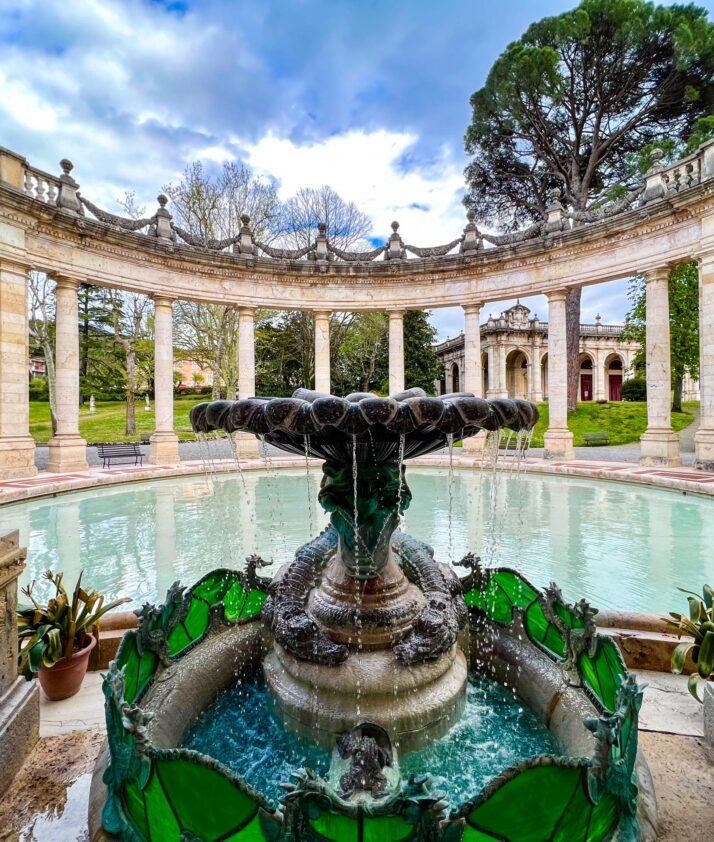

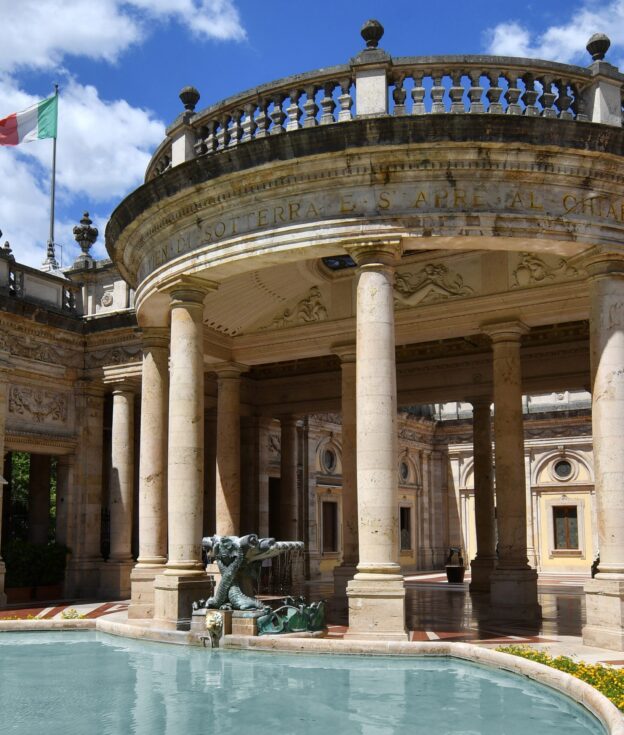


Located along the prestigious Viale Verdi, in front of the Verdi Theater, the Tamerici Salts Pavilion is one of the finest examples of Art Nouveau architecture in Montecatini Terme.
Built in 1903 and designed by architect Giulio Bernardini, the building was conceived as a sales outlet for the thermal salts extracted from the Tamerici spring, which were then highly prized for their therapeutic properties.
A unique example of floral style
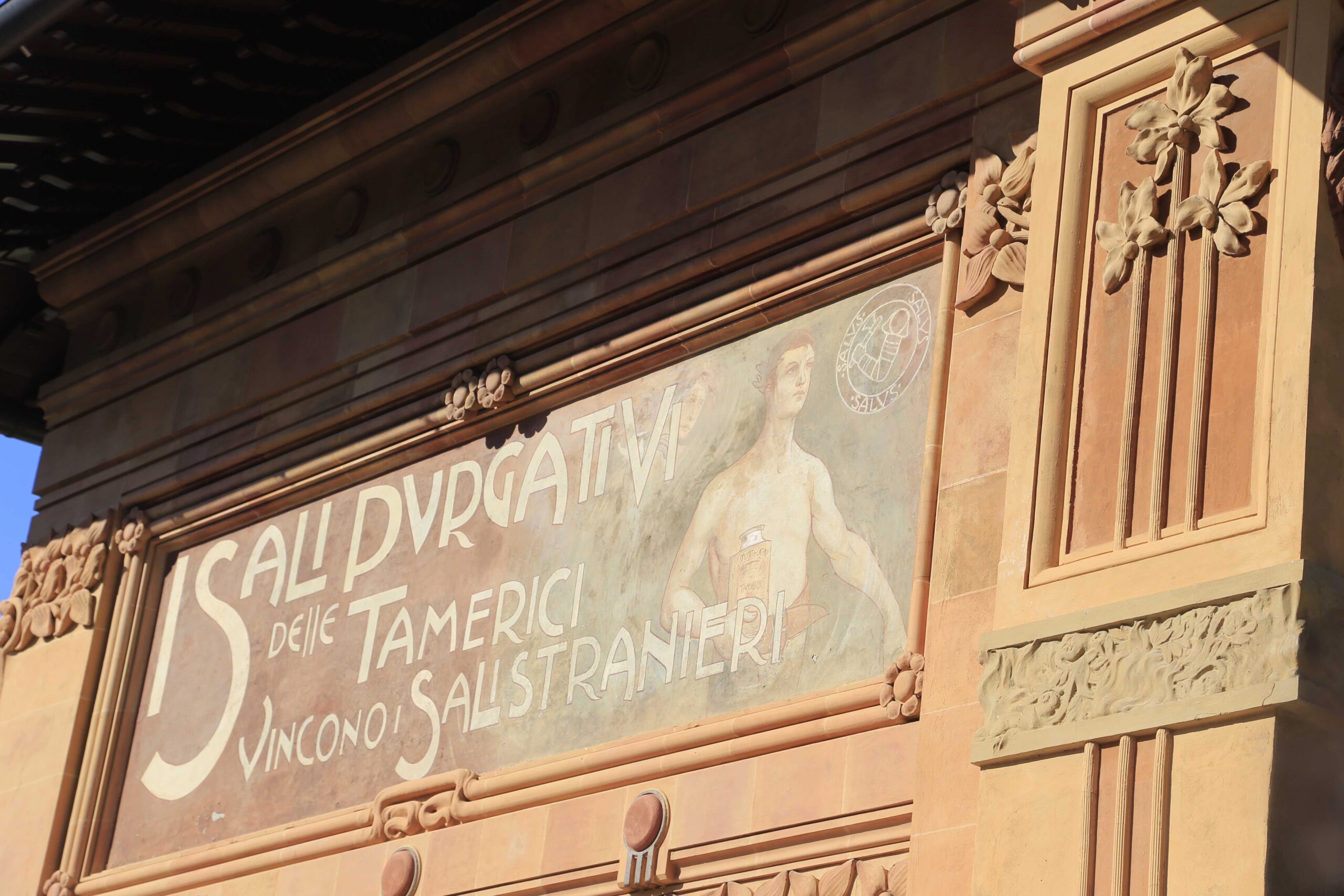
The Pavilion is distinguished by its rich artistic decoration, which blends floral and symbolic elements typical of Art Nouveau. The main facade has three rectangular openings, framed by decorative pillars covered with stoneware panels modeled by sculptor Domenico Trentacoste.
These bas-reliefs, originally intended for the booth of the Florence-based manufactory “The Art of Ceramics” for the 1902 Turin International Exposition, depict the stages of ceramic work: the artist, the turner, the decorator, and the kiln worker.
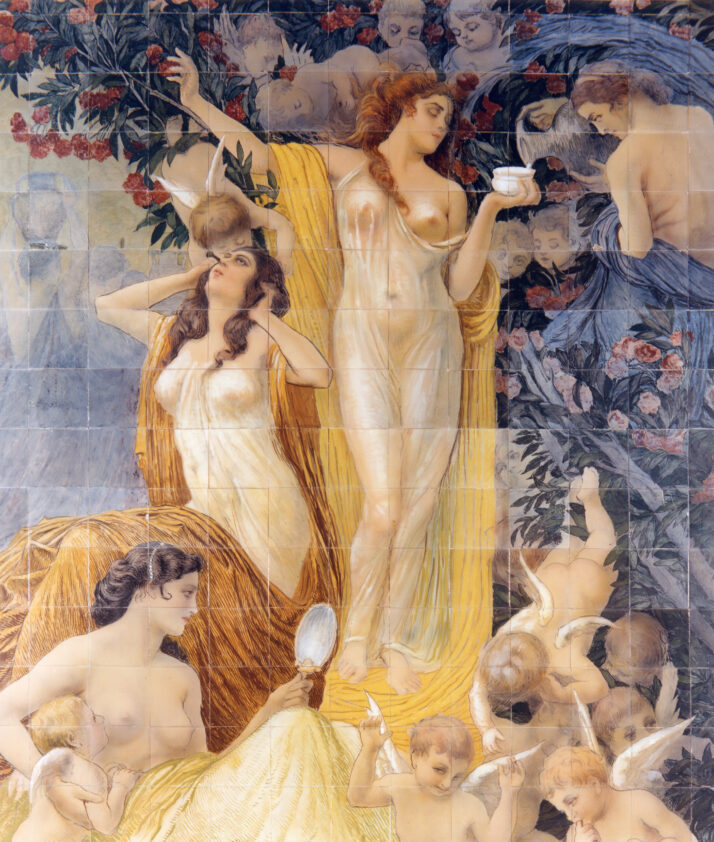
The pictorial frieze under the eaves, the work of Galileo Chini, depicts putti and floral entanglements, while the phytomorphic decorations on the corner pilasters and side facades, stylized to the limit of geometrism, complete the harmony of the whole.
A building designed to be admired at 360 degrees
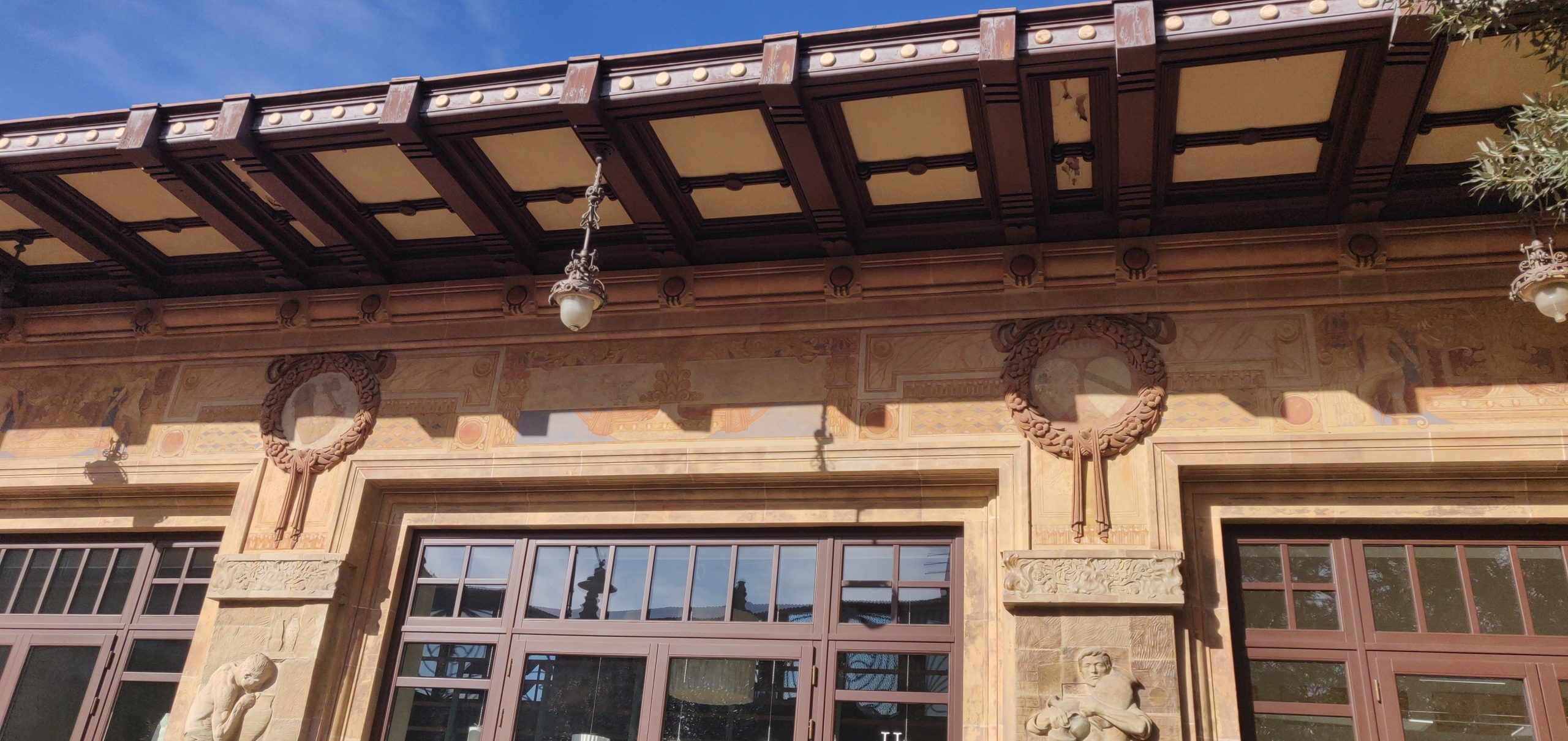
Although designed primarily as a decorative backdrop on Verdi Avenue, the Pavilion was conceived to be appreciated from all angles. The ornamentation on all four elevations testifies to the intent to create a visually striking building, both from the main street and from the gardens behind.
A testimony to the golden age of thermalism
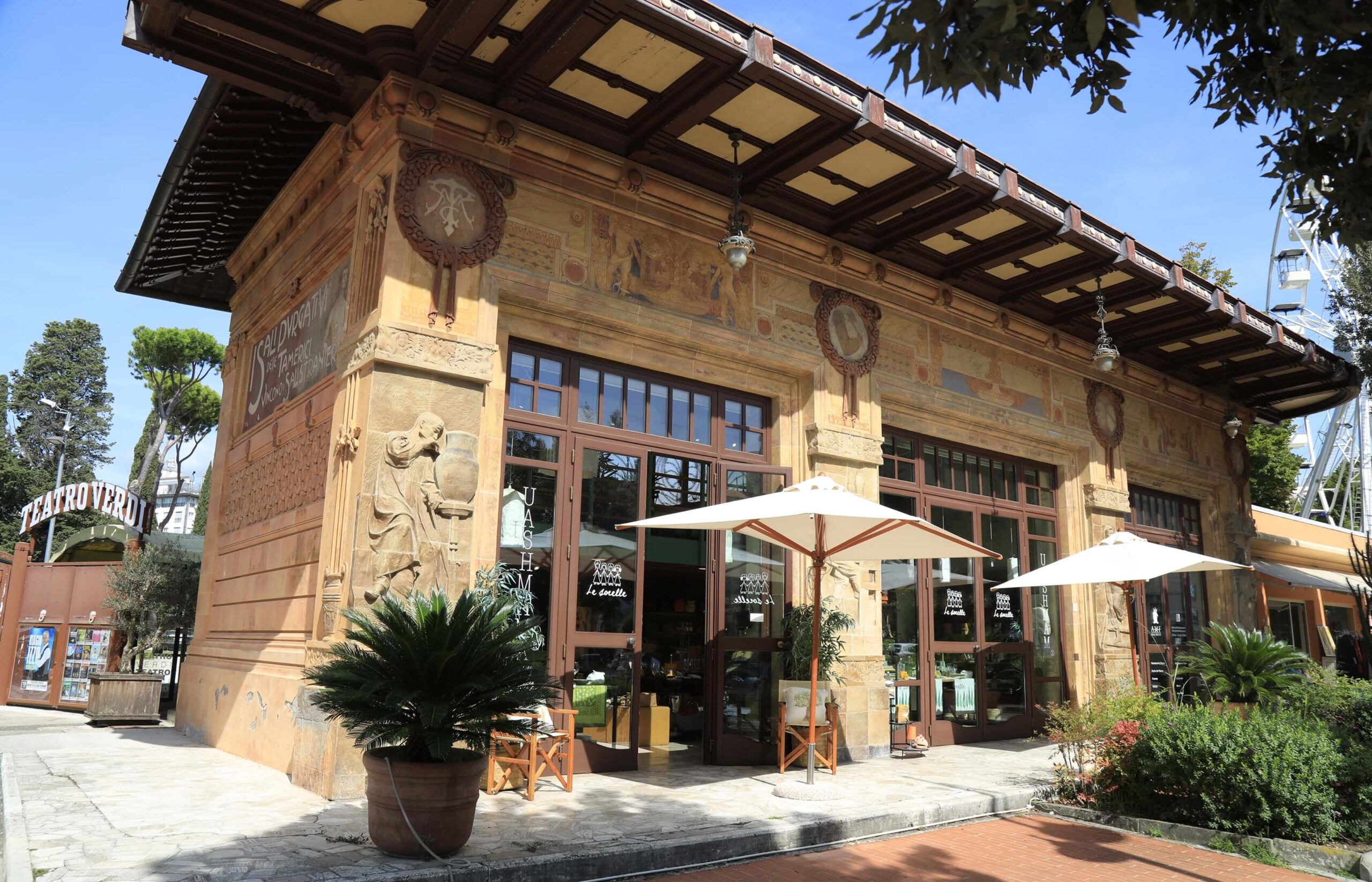
Today, the Tamerici Salts Pavilion stands as a valuable testimony to the golden age of thermalism in Montecatini Terme and the influence of Art Nouveau in the city. Although its original function has changed over time, the building continues to be an architectural and cultural landmark, attracting visitors and lovers of art and history.