



To stroll through Montecatini’s historic spas is to embark on a journey through time, where water becomes not only a source of well-being, but also the inspiring muse of majestic architecture and refined decorations.
These buildings, authentic temples of wellness, tell through their forms and styles the story of an Italy that has made the care of the body and spirit an authentic art.
From water to beauty: the birth of a myth
The history of Montecatini’s thermal baths took concrete shape in the 18th century, when Grand Duke of Tuscany Pietro Leopoldo of Lorraine embarked on a project to enhance the thermal springs already known since antiquity. The sovereign’s enlightened vision transformed a marshy area into an elegant spa, destined to become the drawing room of Europe in the centuries that followed, frequented by artists, men of letters and illustrious personalities.
Rooftop: the Art Nouveau masterpiece
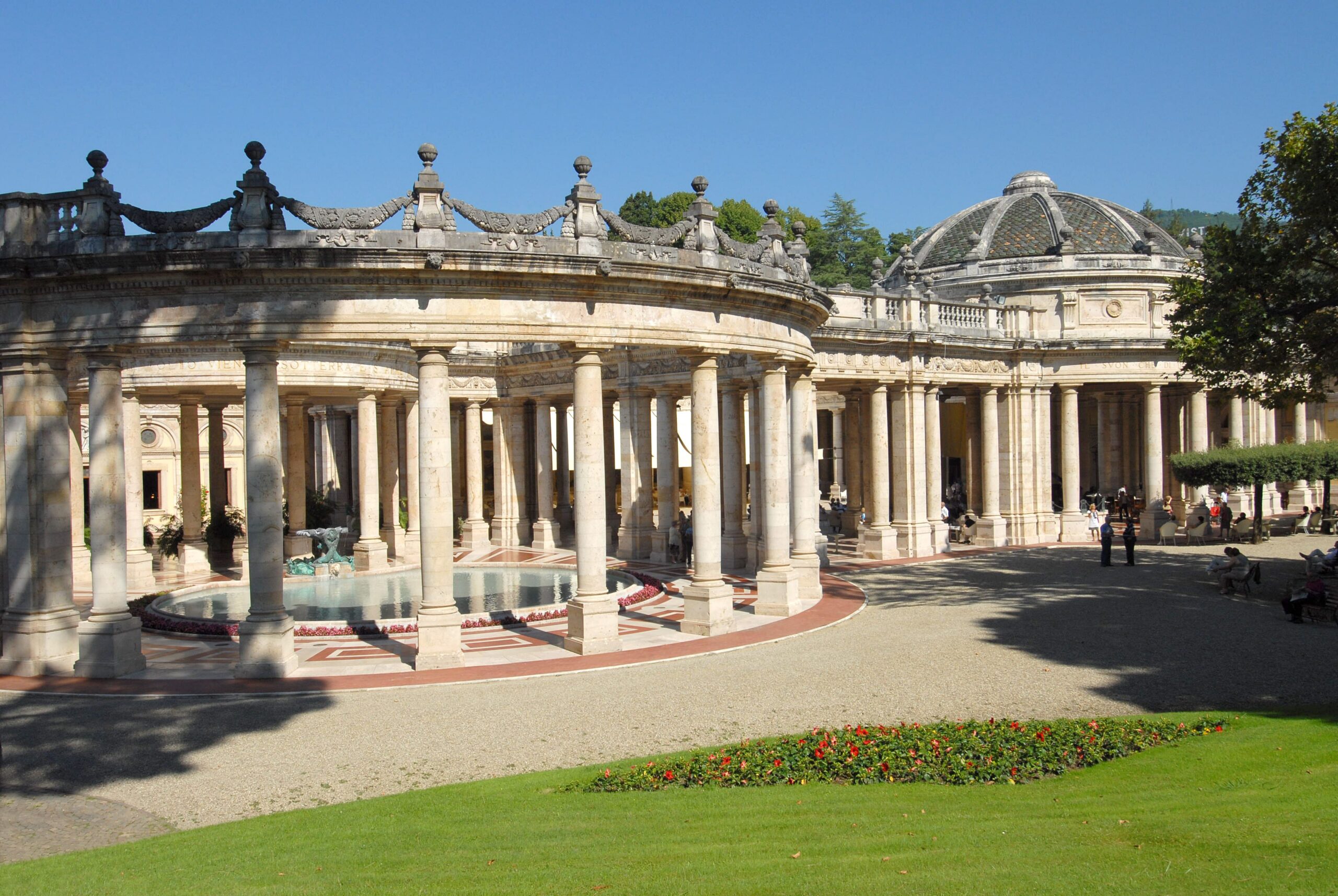
Of all the establishments, the Tettuccio represents the highest expression of the fusion of spa functionality and aesthetic research. Rebuilt between 1919 and 1928 by architect Ugo Giovannozzi, this building embodies the magnificence of Italian Art Nouveau combined with neoclassical references.
The monumental entrance introduces visitors to a path of beauty that culminates in the main hall, where frescoes and decorations tell stories of nymphs and gods related to the world of water. Basilio Cascella’s paintings on the walls of the Writing Room illustrate the four seasons of life with a chromatic delicacy that dialogues harmoniously with the period furnishings.
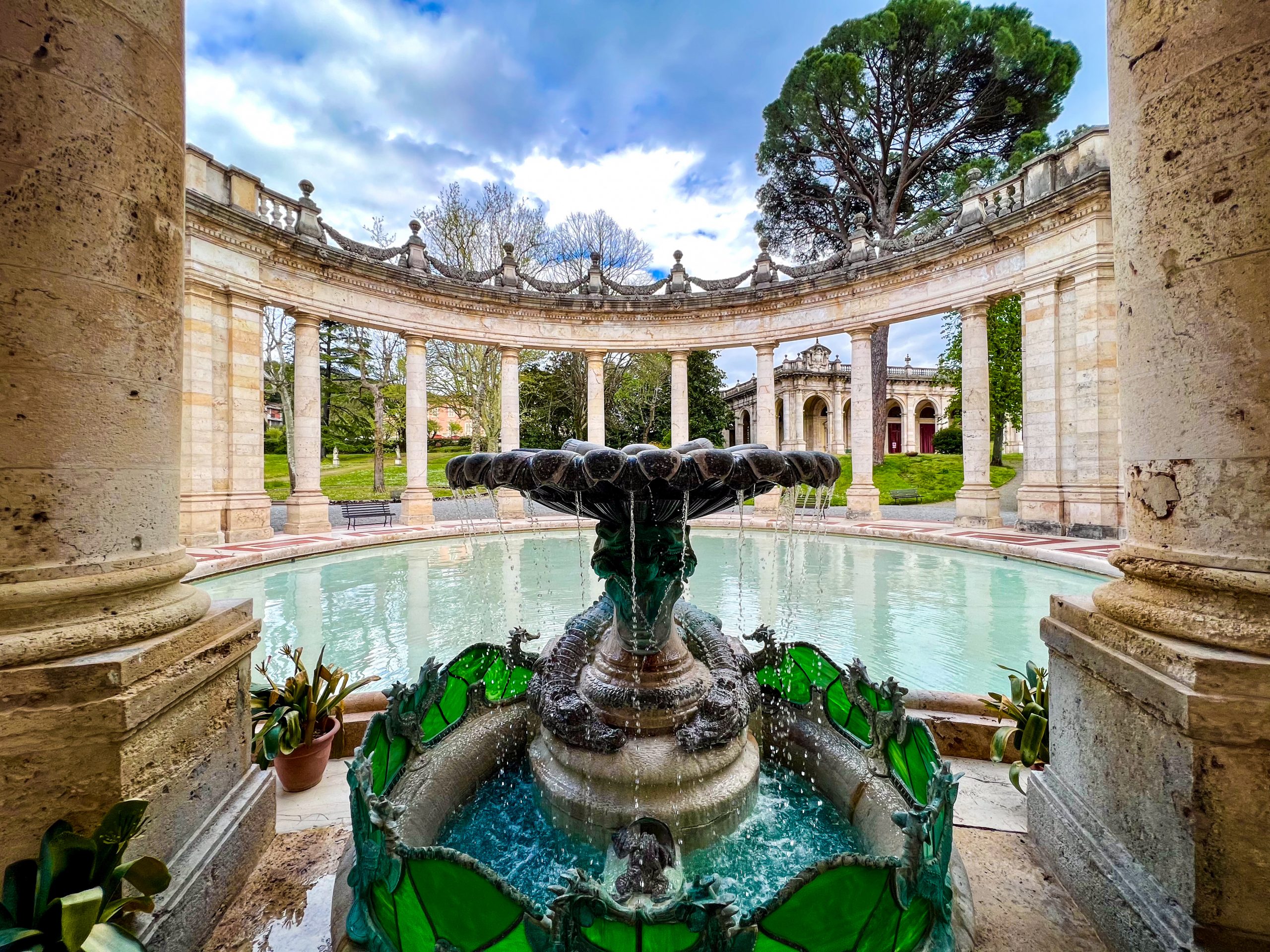
Polychrome ceramics by Galileo Chini, a master of Italian Art Nouveau, embellish the rooms, transforming functional elements into authentic works of art while the large stained-glass window illuminating the central hall projects kaleidoscopic plays of light that change with the passing of the hours.
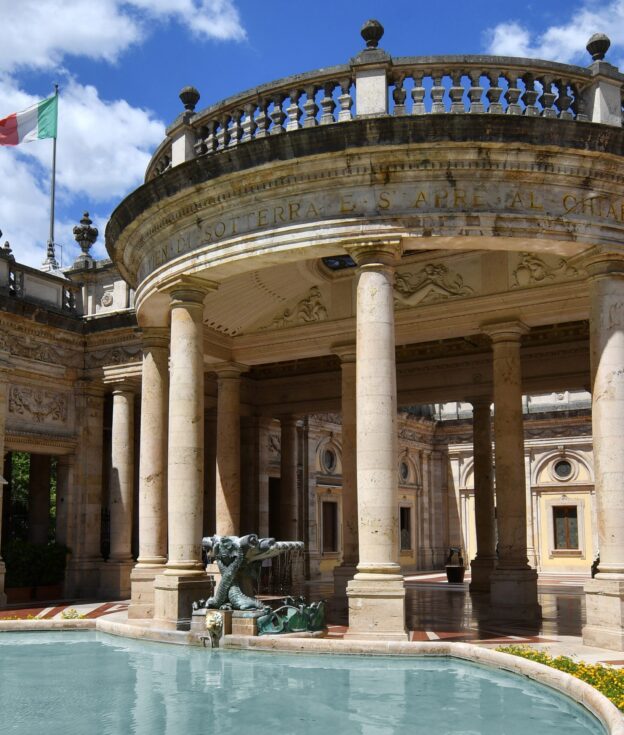
In the outdoor gardens, sculptural fountains such as the famous Crocodile Fountain enliven the green spaces, while the Music Room hosts concert performers from around the world, making the Tettuccio not only a place of healing, but an authentic cultural coterie.
ROOFTOP SPARegina: neoclassical elegance and modernity
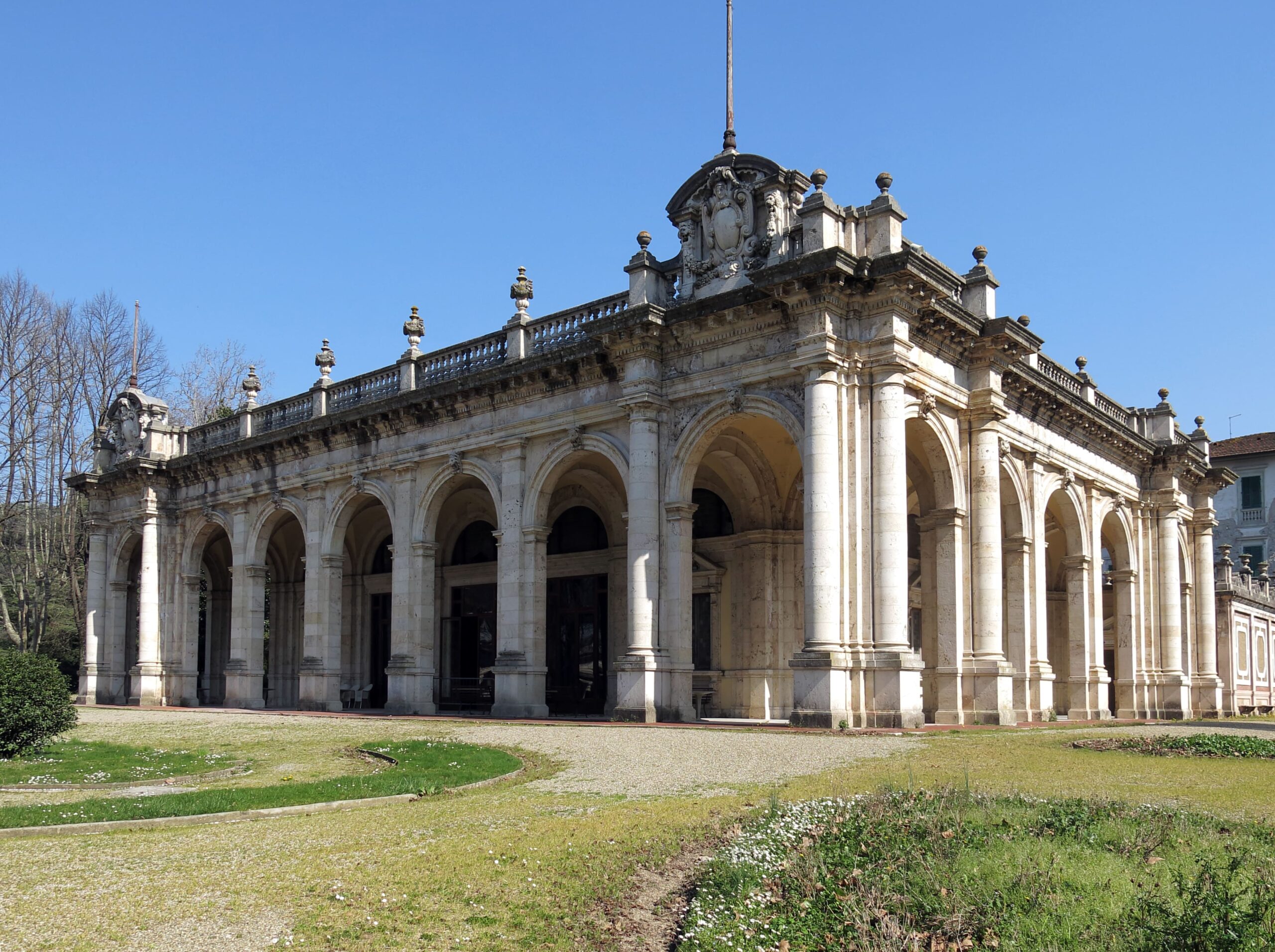
The Regina establishment, built between 1927 and 1929, is a perfect example of how spa architecture has been able to renew itself while maintaining a dialogue with tradition. The majestic facade, with its columns and tympanum reminiscent of classical temples, introduces interiors where white marble becomes the protagonist.
Particularly striking is the large polychrome glass dome above the central hall, the work of Tuscan artists who were able to interpret the tradition of stained glass in a modern way. The stucco decorations framing the doors and windows feature stylized plant motifs that take up the theme of water and regenerative nature.
In the niches arranged along the interior portico, allegorical sculptures depict the benefits of the thermal waters, creating an artistic journey that accompanies visitors during their wellness experience. Floor mosaics, with elaborate geometries, complete this symphony of decorative arts that makes the Regina an authentic open-air museum.
QUEEN SPAExcelsior: harmony of space and nature
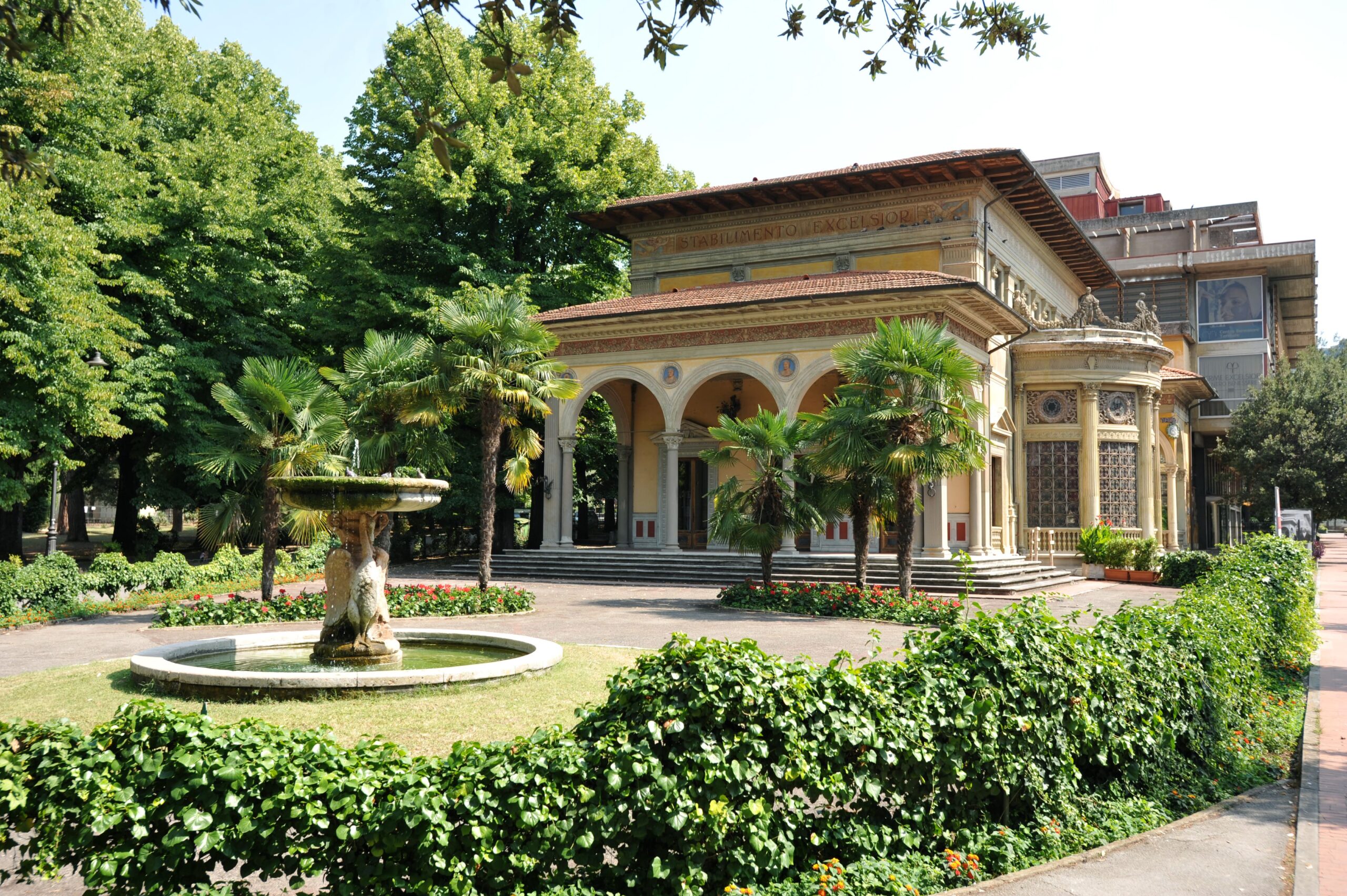
The Excelsior establishment, originally called the New Bath in its first nineteenth-century construction, was completely redesigned in the 1920s, becoming one of the most successful examples of the integration of architecture and landscape.
The Ionic colonnade surrounding the building creates a striking play of light and shadow that changes throughout the day, while inside, the large central hall is embellished with a finely decorated coffered ceiling. The walls host pictorial panels illustrating mythological scenes related to healing waters, created by artists of the Tuscan school who were able to interpret classical themes with modern sensitivity.
The real masterpiece of the Excelsior establishment, however, is its park, designed as a natural extension of the building: winding paths, geometric flowerbeds, and centuries-old trees create an immersive experience where art and nature come together.
EXCELSIOR SPARedi: functionality and rational beauty
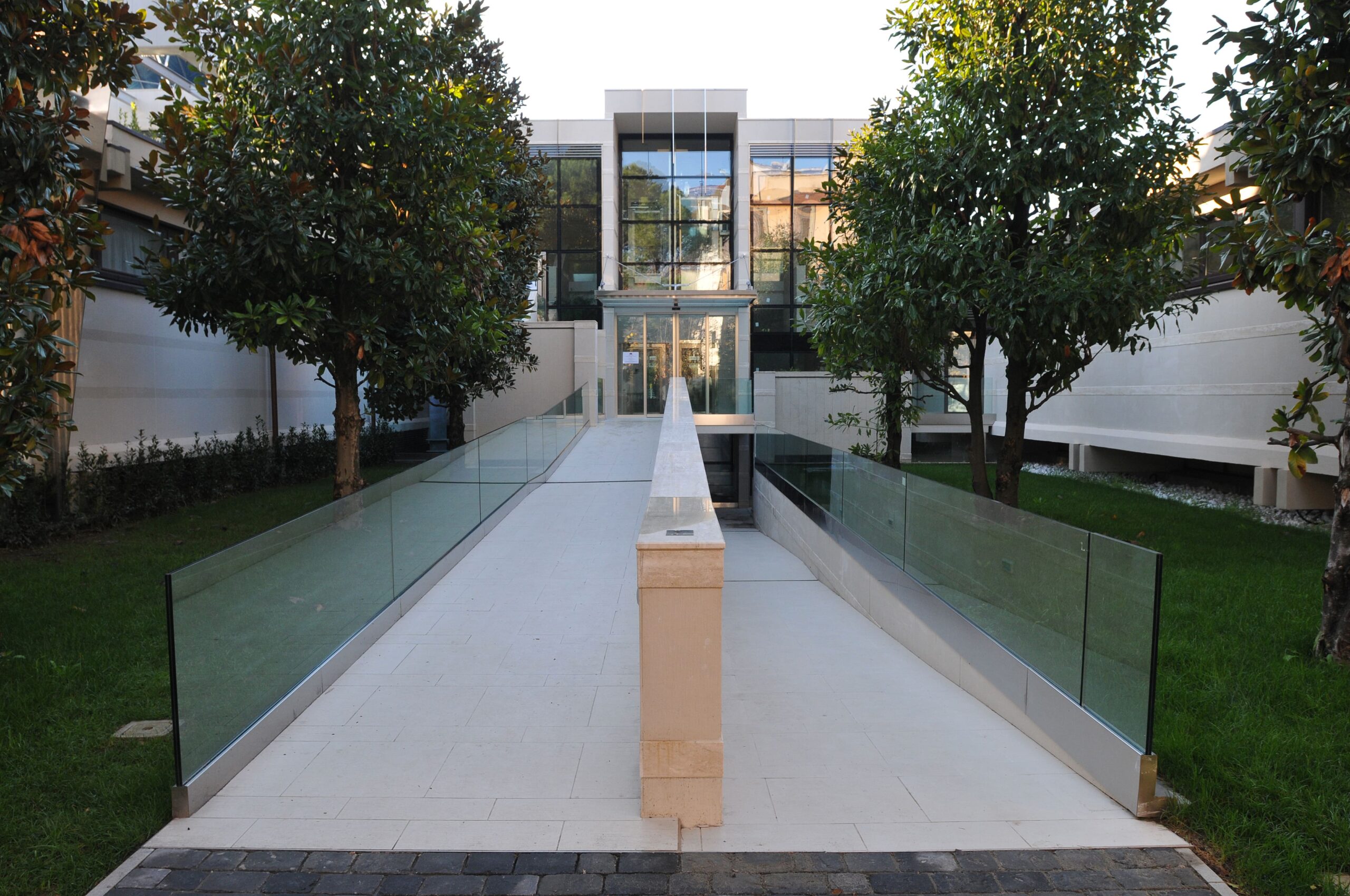
The Redi Plant, dedicated to the famous physician and naturalist Francesco Redi, differs from the others in its more rationalist approach. Built in the 1930s, it features more essential lines that anticipate architectural modernism.
Although less ornate than other buildings, the Redi hides authentic artistic gems: the large fresco that dominates the atrium, by painter Giulio Bargellini, depicts the history of spa medicine through the centuries, with a figurative language that combines historical rigor and expressive power.
Particularly interesting are the lamps and wrought-iron elements, which testify to the survival of artistic craftsmanship even in a more modern and functional context. The sandstone benches, decorated with bas-reliefs depicting medicinal plants, are a fine example of how even furniture can become a vehicle for beauty and culture.
REDI SPATamerici: the discreet charm of elegance
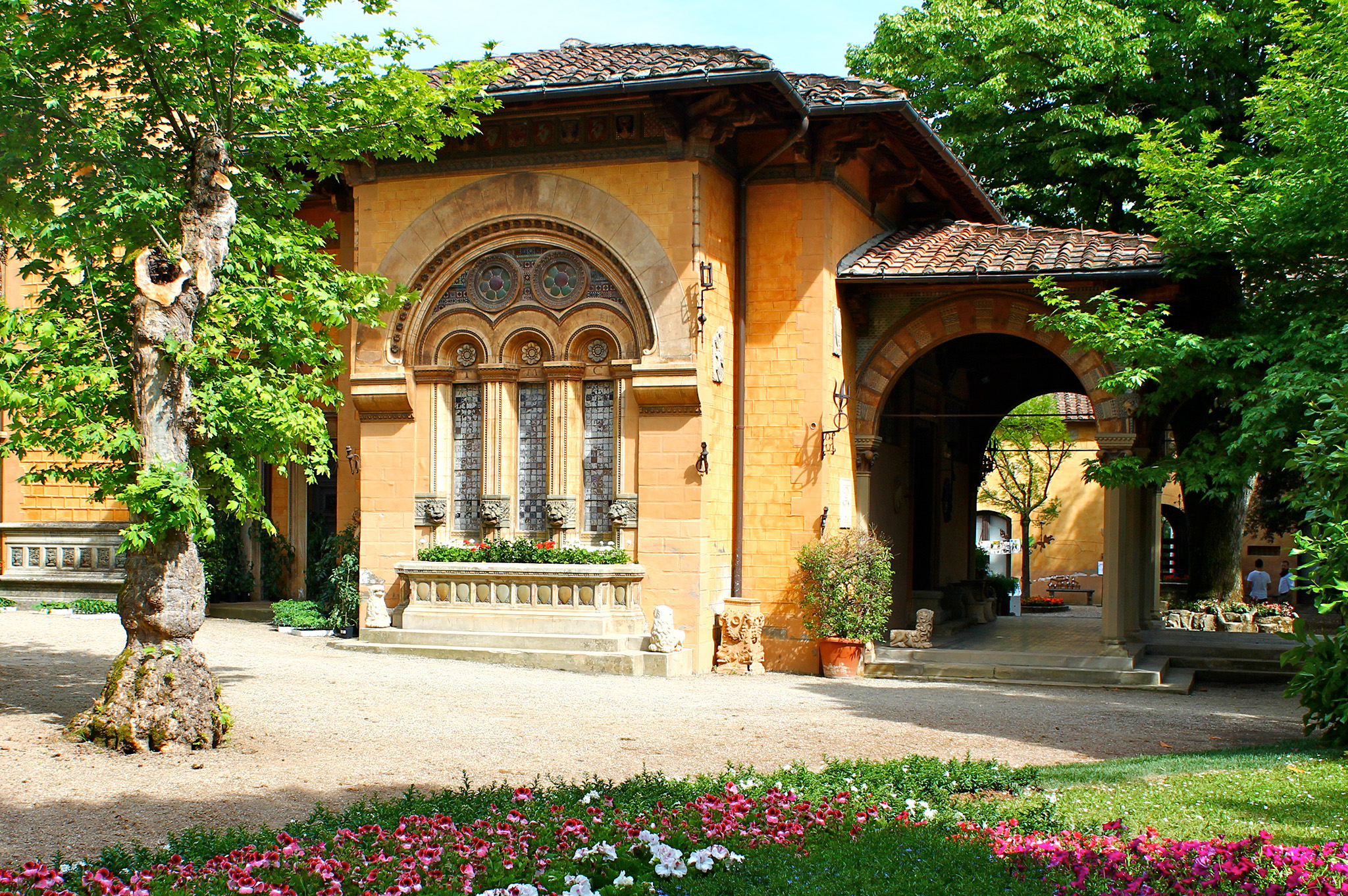
The Tamerici plant owes its name to the plants that once surrounded the spring. Its architecture, which dates back to the early 20th century, has an understated elegance that blends perfectly with the surrounding park.
The most valuable artistic element is the Sala della Mescita, where a series of glazed ceramic panels tell scenes of life at the baths through the centuries. The ceiling, with its floral decorations in colored stucco, creates an effect of lightness that contrasts with the solidity of the green marble columns that punctuate the space.
In the outdoor garden, the central bronze fountain, by sculptor Antonio Maraini, depicts a nymph pouring water from an amphora, symbolizing the generosity of nature bestowing its beneficial waters on humanity.
TAMARISKS SPAA museum spread among parks and colonnades
What makes the Montecatini spas unique is their dimension as a diffuse museum, where art is not confined to exhibition rooms but permeates every aspect of the spa experience. From door handles to garden lampposts, from hydropinic treatment glasses to resting benches, each element was conceived as part of an overall aesthetic project.
This attention to detail testifies to a conception of healing that goes beyond mere physical therapy to embrace a spiritual and emotional dimension where beauty itself becomes medicine. Indeed, the artists who worked at the spas understood that well-being also comes through the contemplation of beauty.
A living legacy
To walk among these buildings today is to retrace the history of Italian taste and art, but also to rediscover a model of holistic well-being that is as relevant today as never before. In an increasingly frenetic world, these places remind us of the value of slowness, contemplation and self-care, teaching us that true beauty comes from the harmony between nature, art and well-being.